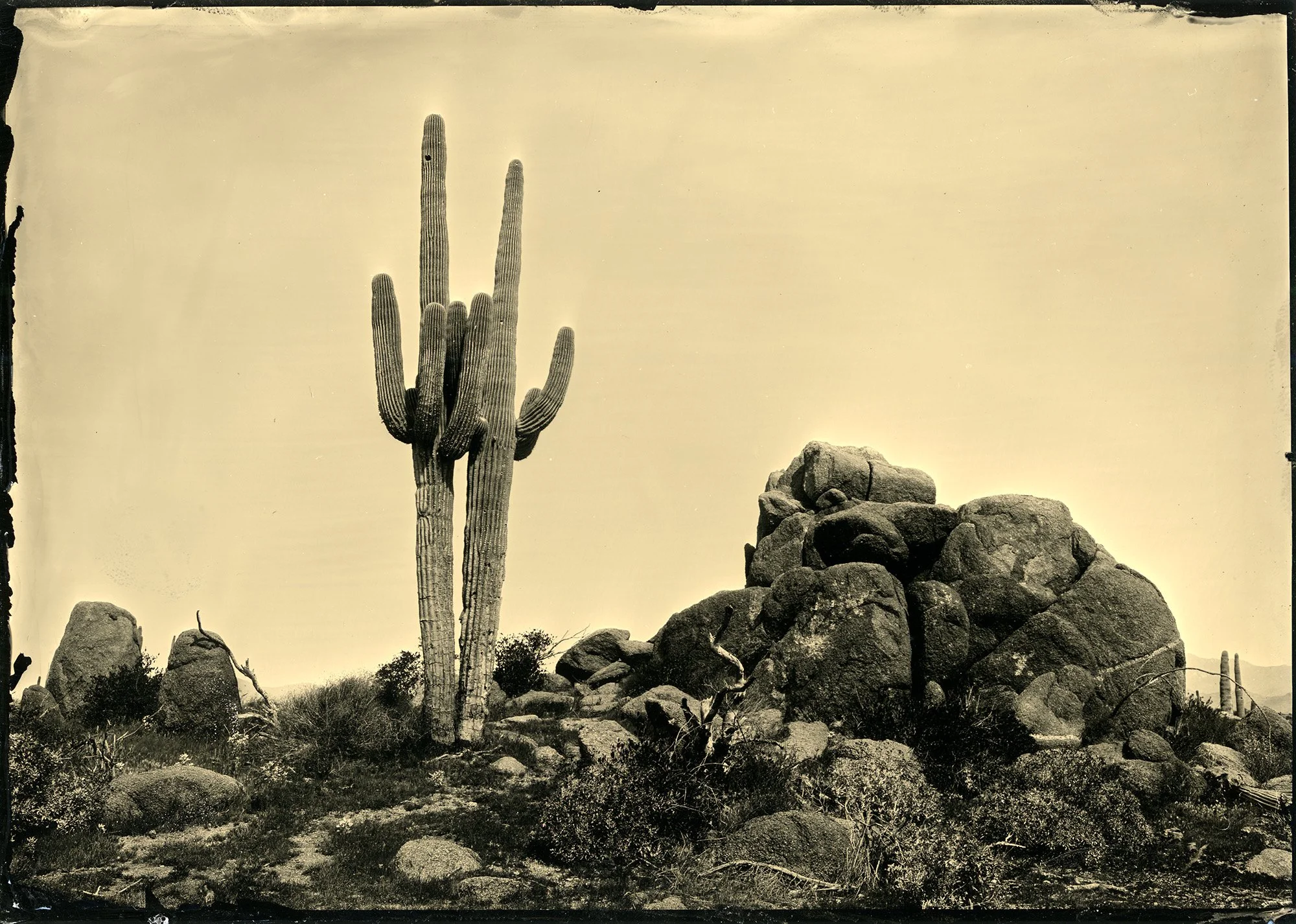
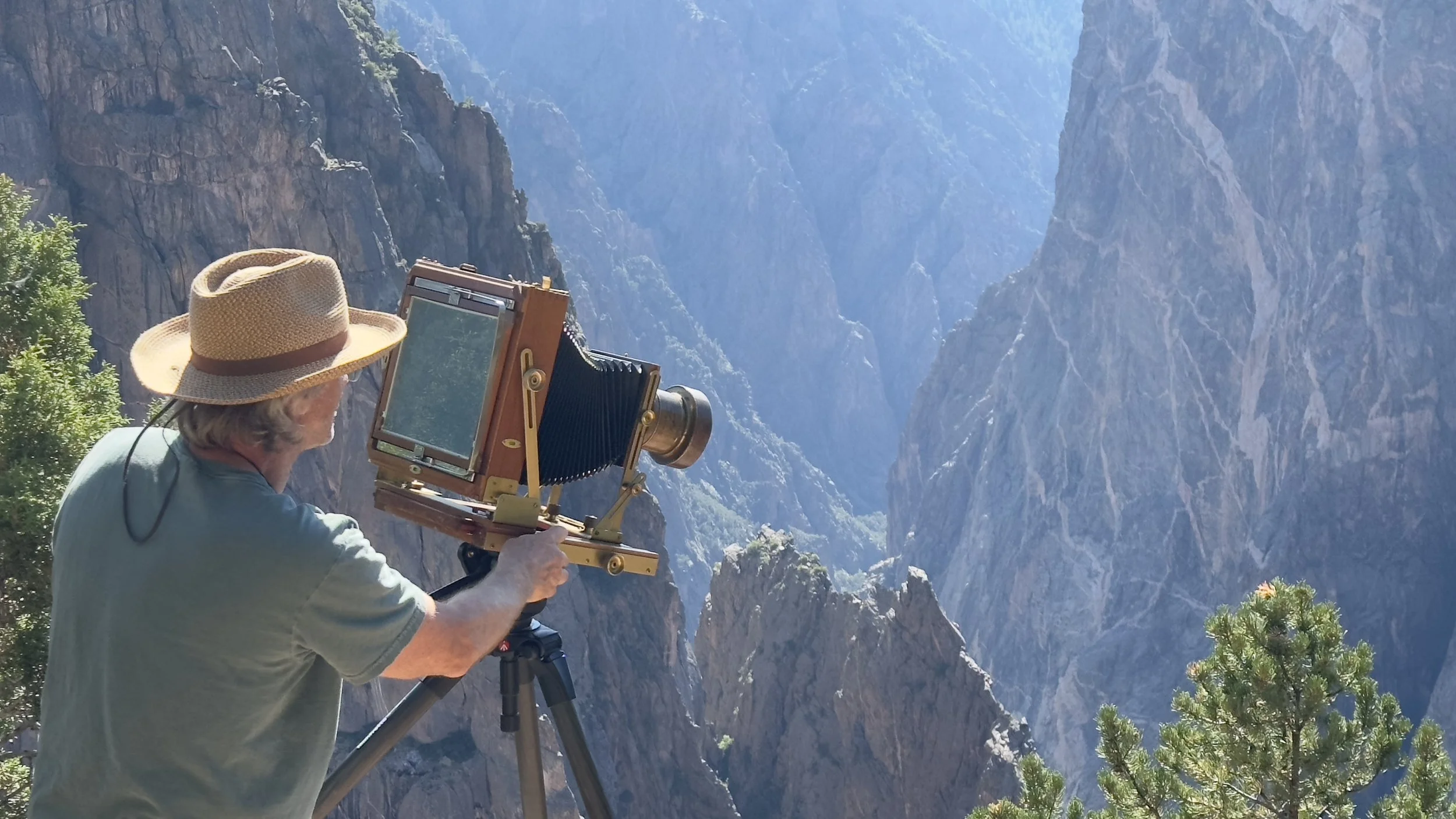
The Tintype process, also known as the “wet plate collodion process”, “melainotype”, or “ferrotype”, is a 19th-century photographic method creating a direct positive image on a metal plate. It involves coating a black-lacquered iron or aluminum plate with collodion, dipping it in silver nitrate for light sensitivity, and capturing an image in a large-format camera while wet. It was invented in England by Frederick Scott Archer in the 1850’s and was the primary technique of photography until 1875. Vintage wood cameras and vintage brass lenses from the 1800’s era are used to create the photograph.
Key Aspects of the Tintype Process
Workflow: The entire process takes about 15 minutes, with over 30 steps including pouring the emulsion, sensitizing, exposing, developing, fixing, and varnishing.
"Wet Plate" Requirement: The plate must remain moist from the collodion coating until development, forcing photographers to work near a portable darkroom.
Unique Result: It produces a one-of-a-kind, slightly underexposed, reversed image with high silver highlights that is durable and lasts for up to 500 years without fading or degrading.
Usage Examples: Today, it is primarily used for authentic historical reenactments, unique artistic portraits, and archival, high-contrast, one-of-a-kind art pieces.
Characteristics: Due to low sensitivity (often less than ISO 1), it requires high light levels, such as intense studio strobes or bright natural light, often resulting in 3 to 5-second exposures.